Introduction
VFX Animation Course learning the usually begins with creativity, curiosity and the excitement of entering the world of movies, gaming, design and digital storytelling. Many students join with little or no experience, but step by step they start understanding how visual effects and animation are created professionally.
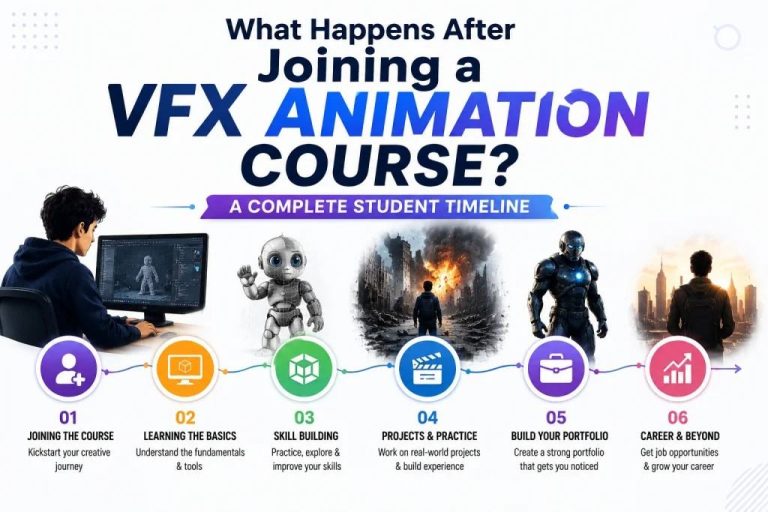
If you are wondering what actually happens after joining a vfx animation course , here’s a simple student timeline that can explains the journey from beginner to industry ready creator.
Month 1: Understanding the Basics
The first stage focuses on building to the strong foundation. Students learn:
- Principles of animation
- Visual storytelling
- Design basics
- Color theory
- Sketching and composition
- Introduction to industry software
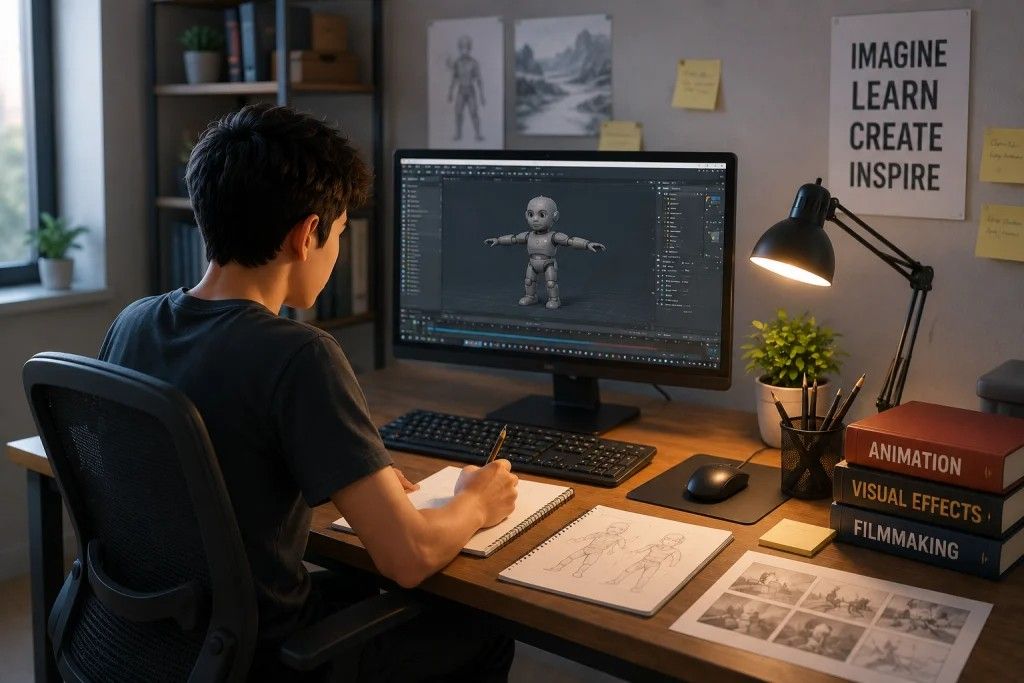
This phase helps students develop creative thinking and understand how animation and visual effects work together.
Month 2–3: Exploring Design & Digital Creativity
Once the basics are clear then students start working on the digital tools and creative exercises. This is where learning becomes more practical.
Students usually begin:
- Digital illustration
Character concepts - Motion graphics basics
- Scene creation
- Typography and visual layouts
At this stage, confidence starts growing because students can see their ideas turning into the visuals.
Month 4–6: Entering the World of 3D & Animation
This is one of the most exciting phases for learners. Students are introduced to:
- 3D modeling
- Texturing
- Lighting
- Rigging
- Character animation
- Camera movements
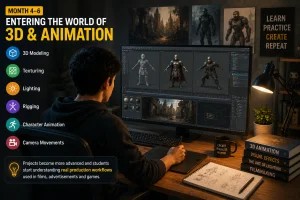
Projects become more advanced and students start understanding real production workflows used in films, advertisements and games.
During a professional VFX Animation Course, students also learn how creative ideas are transformed into realistic visuals through industry-standard tools, production workflows, animation practice and collaborative digital projects.
Month 7–8: Learning VFX Production
Now students move deeper into visual effects production. They work on:
- Green screen compositing
- Rotoscoping
- Tracking
- Particle effects
- Video editing basics
- CGI integration
This stage teaches how action scenes, fantasy visuals and cinematic effects are created for the modern entertainment.
Month 9–10: Portfolio & Real Projects
A professional portfolio becomes important during this phase. Students usually create:
- Short animation clips
- Showreels
- Creative assignments
- Team projects
- Industry style presentations
Portfolio work helps students to showcase their creativity and technical skills during the interviews or freelance opportunities.
Final Stage: Career Preparation
Towards the end of learning journey, students begin preparing for the professional world.
This may include:
- Resume preparation
- Interview training
- Internship support
- Freelance guidance
- Industry workshops
By this time, students are no longer beginners. They understand how creative projects move from concept to final screen output.
More Than Just Software Learning
One important thing students realize during the journey is that animation and VFX are not only about software. The course also improves:
- Creativity
- Problem-solving
- Team collaboration
- Visual communication
- Storytelling skills
These abilities are valuable to across multiple creative industries.
Conclusion
Every student’s journey is different but the learning process gradually transforms beginners into confident digital creators. With consistent practice, project work and creativity students gain the skills needed for careers in animation, filmmaking, gaming, advertising and the content creation.
A structured learning path helps students to understand both the artistic and technical side of the industry, making the journey exciting from start to finish.
If you are planning to build a creative career in digital media industry then choosing the right institute is an important first step. A professional VFX Animation Course can help students gain practical knowledge, industry exposure and portfolio building experience through structured training. At Arena Animation, students can explore the animation, visual effects, 3D design and creative production with expert guidance and hands on learning. Joining a VFX Animation Course at the right place helps learners improve their creative skills, understand real production workflows and prepare for future opportunities in animation and media industries.