Introduction
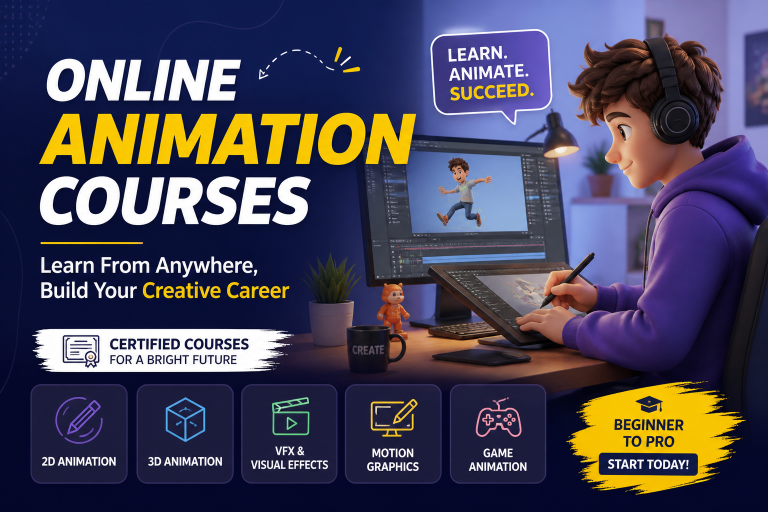
Online animation courses have become one of the easiest and most flexible ways to learn the creative skills and build a successful career in the digital world. Whether you are beginner exploring animation for the first time or someone looking to upgrade your skills and online animation course learning offers access to industry level training from anywhere.
In 2026, the demand for an animation professionals continues to grow across film, gaming, advertising, social media, VFX, UI design and digital content creation. With right course and consistent practice, learners can develop an both technical and creative abilities without being limited by location.
Why choose Online Animation Courses ?
Learning animation ,the online provides flexibility and convenience that traditional learning methods often cannot offer. Students can learn at their own pace ,revisit lessons and manage their studies alongside school, college or work schedules.
Some major advantages include:
- Flexible learning schedules
- Access to updated tools and software
- Learn from industry professionals
- Lower cost compared to many offline programs
- Opportunity to build a portfolio while learning
- Suitable for beginners and the experienced learners
Online animation course learning has made a creative education more accessible than ever before.
Types of Animation courses Available online
Animation is the broad field with multiple specializations. Before choosing a course, it will helps to understand the available paths.
1. 2D Animation
2D animation focuses on the character movement, storytelling, frame-by-frame animation and visual design. It is commonly used in cartoons, explainer videos and digital content.
kills covered may include:
- Character design
- Storyboarding
- Motion principles
- Digital illustration
- Animation timing
2. 3D Animation
3D animation involves creating objects and characters with depth and movement. This field is widely used in films, games, architecture, and advertising.
Common topics include:
- Modeling
- Rigging
- Texturing
- Lighting
- Rendering
- Character animation
3. VFX and Motion Graphics
Visual effects and motion graphics are used in the movies, advertisements and online content. These courses teach visual storytelling through effects and animation techniques.
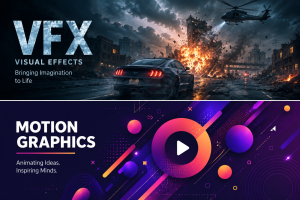
Students may learn:
- Video compositing
- Green screen
- techniques
- Motion design
- Particle effects
- Editing workflows
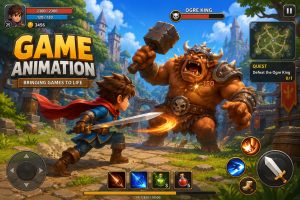
4. Game Animation
Game animation focuses on character movement and interactive design within gaming environments.
Topics often include:
- Game asset creation
- Unreal engine workflows
- Character animation
- Environment animation
Features to look for in the online animation course
Not all courses provide the same value. Before enrolling ,consider these factors:
Structured curriculum
A course should guide the students step by step from basic concepts to advanced techniques.
Practical projects
Animation is a skill developed through practice. Look for project-based learning that helps build a portfolio.
Software Training
Industry tools are important for career growth. Courses should include practical exposure to animation software.
Popular software often includes:
- Blender
- Maya
- Adobe after effects
- Photoshop
- Unreal Engine
- Toon Boom
Mentor Support
Guidance from experienced trainers can help students to improve faster and avoid common mistakes.
Portfolio Development
Employers often value portfolios more than the certificates. Strong projects demonstrate practical abilities.
Beginner to Pro Learning Roadmap
Many learners wonder where to start. A simple progression can make learning easier.
Beginner Level
Focus on understanding animation fundamentals:
- Basic design principles
- Drawing concepts
- Animation timing
- Character movement
- Software introduction
Intermediate Level
Move toward technical skills:
- Advanced animation tools
- Storytelling techniques
- Motion principles
- Scene creation
Advanced Level
At this stage, students can specialize:
- VFX
- 3D animation
- Game design
- Motion graphics
- Character animation
Specialization helps to create stronger career opportunities.
Career opportunities after learning animation
Animation skills are now valuable across multiple industries. Completing the right training can open opportunities such as:
- 2D Animator
3D Artist - Motion Graphics Designer
- VFX Artist
- Game Animator
- Video Editor
- Character Designer
- UI Motion Designer
Freelancing and remote work opportunities have also increased the significantly in recent years.
Tips to succeed in the Online Animation Learning
Many learners join the courses but struggle to stay consistent. These simple practices can help:
Practice daily: Even one hour of regular work to creates progress.
Build projects: Apply every lesson immediately.
Study animation principles: Strong fundamentals improve quality.
Watch industry work: Observe movies, games and animated content.
Create a portfolio: To keep improving and showcasing your work.
Consistency often matters are more than speed.
Conclusion
Choosing the right online animation course is not only about learning software ,it is about developing creativity, storytelling ability and practical experience. The best online animation courses in 2026 to combine structured learning ,real projects and industry relevant skills.
Whether your goal is to work in the film, gaming, design or content creation ,starting with the right learning path can help build a strong foundation. With dedication and regular practice, beginners can gradually move toward professional-level animation skills and create exciting career opportunities in the creative industry.